

The “15-minute city” idea has moved from planning documents into local policy across Europe. For bike dealers, it matters less as a slogan than as a signal: cities are making short journeys by bicycle easier, and that changes who walks through the door.
Infrastructure changes the customer profile
Protected cycle lanes and lower traffic speeds make cycling feel safe to people who previously avoided it. Those new riders are not sports cyclists. They care about step-through frames, lights, racks, fenders and a bike they can leave outside without anxiety. A showroom stocked only with performance models will miss them entirely.
The e-bike’s specific role
An electric bicycle extends the practical radius of a short journey. A conventional bike works well at two or three kilometres; pedal assistance makes five to fifteen kilometres realistic for the same rider. That is the gap most European commuters live in — close enough to cycle, far enough to be inconvenient without assistance.
Read the regional differences
- Mature cycling markets such as the Netherlands and Denmark already have high bicycle ownership. Demand there leans towards replacement, comfort and cargo capability rather than first-time adoption.
- Growing markets in southern and eastern Europe are adding infrastructure quickly. First-time buyers need clear explanation, demonstration and visible after-sales support.
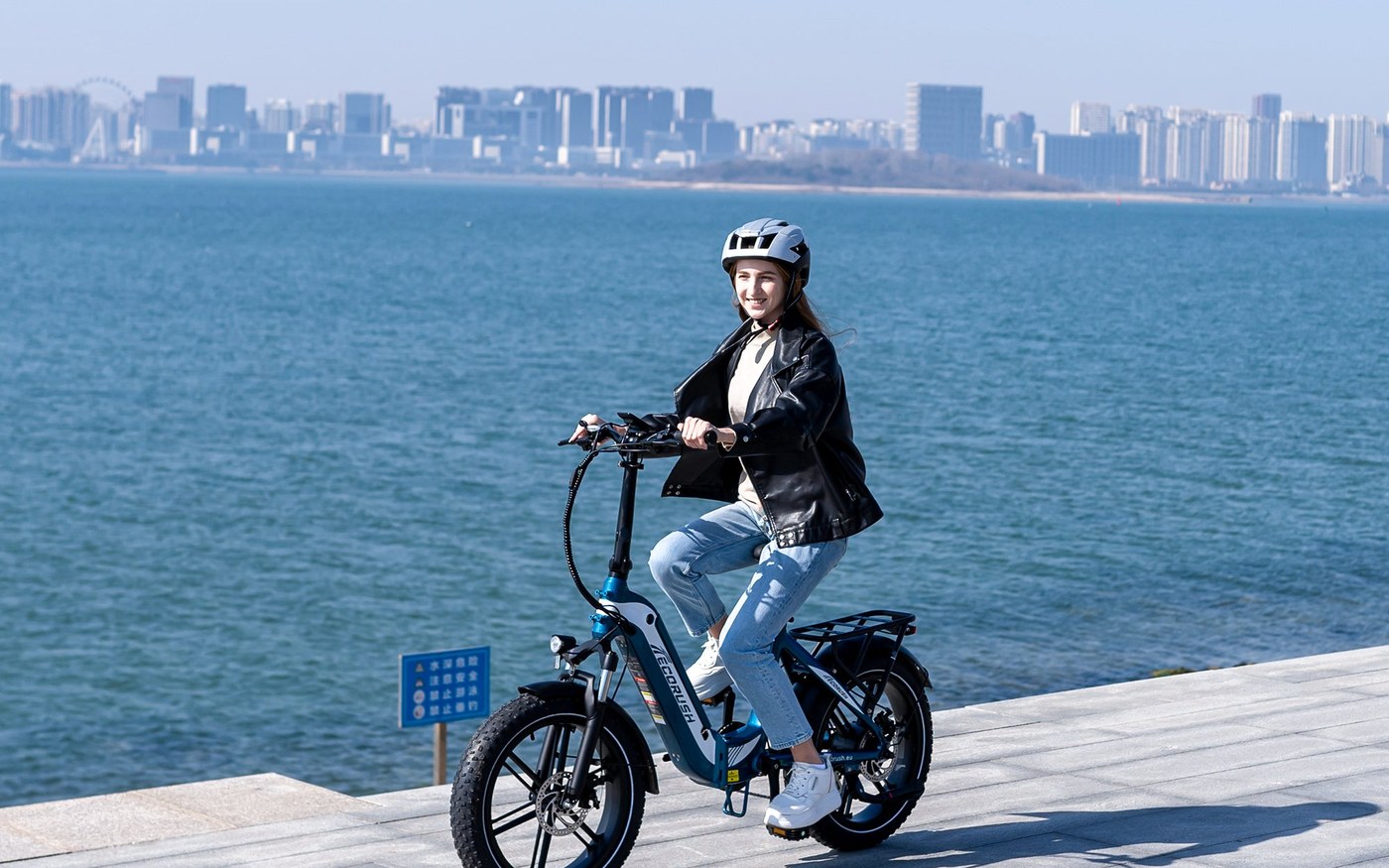
- Dense historic cities reward compact and folding formats, where storage and narrow streets dominate the decision.
What dealers can do now
Map new cycle-lane projects in your catchment area. Where a protected route is planned, expect commuter demand within one to two seasons. Build stock around that forecast: a folding model for storage-constrained riders, a mid-range commuter with a rear rack, and a long-range option for those crossing town.
Work with municipal or employer schemes where they exist. In many markets, purchase incentives and salary-sacrifice arrangements are still underused, and a dealer who understands the paperwork wins the customer.
Do not overpromise on range
New riders often arrive with unrealistic expectations. A 499Wh battery covers typical daily trips; 748.8Wh suits longer cross-town journeys and occasional touring. Honest advice creates better referrals than a headline maximum range.
Urban policy is creating the riders. Dealers who stock for those riders — rather than for the cyclists they already know — will capture the growth.
Plan your range with us
ECORUSH supplies folding, commuter and long-range platforms suited to European urban markets. Talk to the B2B team about regional stock planning.
What a 15-minute city means for a bike shop
The policy detail matters less than the practical result: more short trips are being made by bicycle, and more people who never cycled before are trying it. Those riders arrive at a shop with different questions. They want to know where the bike can be stored, whether it can carry shopping and what happens when it rains. They rarely ask about gearing.
Stock and train accordingly. A showroom that answers the storage and weather questions will convert first-time riders; one that leads with component specifications will lose them.
Cargo, children and the family use case
Micromobility is not only about solo commutes. Families use e-bikes for school runs, grocery trips and short visits to friends. That shifts the requirement towards a rear rack, a stable standover height and predictable handling at low speed. A step-through model with a rack is often a better family answer than a lighter performance bike.
The long-range step-through e-bike serves this group well: 748.8Wh for repeated short trips, a comfortable mounting height and a rack fitted as standard. Demonstrating it with a bag on the rack makes the family use case immediately clear.
Charging and parking shape the purchase
In dense urban areas, the ability to charge at home is not universal. Ask customers where the bike will be parked overnight and whether there is a socket nearby. A removable battery solves many of these situations: it can be taken indoors while the frame remains in a secure area.
For dealers, this question is also an opportunity to sell the right accessory set — a second charger for the office, a lock that secures both frame and battery, and a cover for bikes kept outside.
Reading a city’s plans before you buy stock
Municipal cycling plans are usually public. Look for protected lanes, junction upgrades and connections between districts rather than isolated painted strips. A connected route changes behaviour; a single lane rarely does. Where a connected network is planned, expect commuter demand within a season or two.
Then match the stock to the route shape. Short radial routes into a centre favour folding and compact models. Longer cross-town corridors favour batteries above 600Wh. Observation beats assumption.
Measure the change in your own town
National statistics rarely describe your local market. Track the number of enquiries that mention commuting, the routes customers name and the share of first-time buyers. If those numbers move after a new cycle lane opens, the pattern will tell you what to stock next season.
Keep the notes simple — a spreadsheet with a date and a short description is enough. After a year it becomes a more useful planning tool than any generic market report.
Looking for a reliable e-bike partner?
Explore our CE/EN15194 certified lineup and factory-direct B2B pricing.