

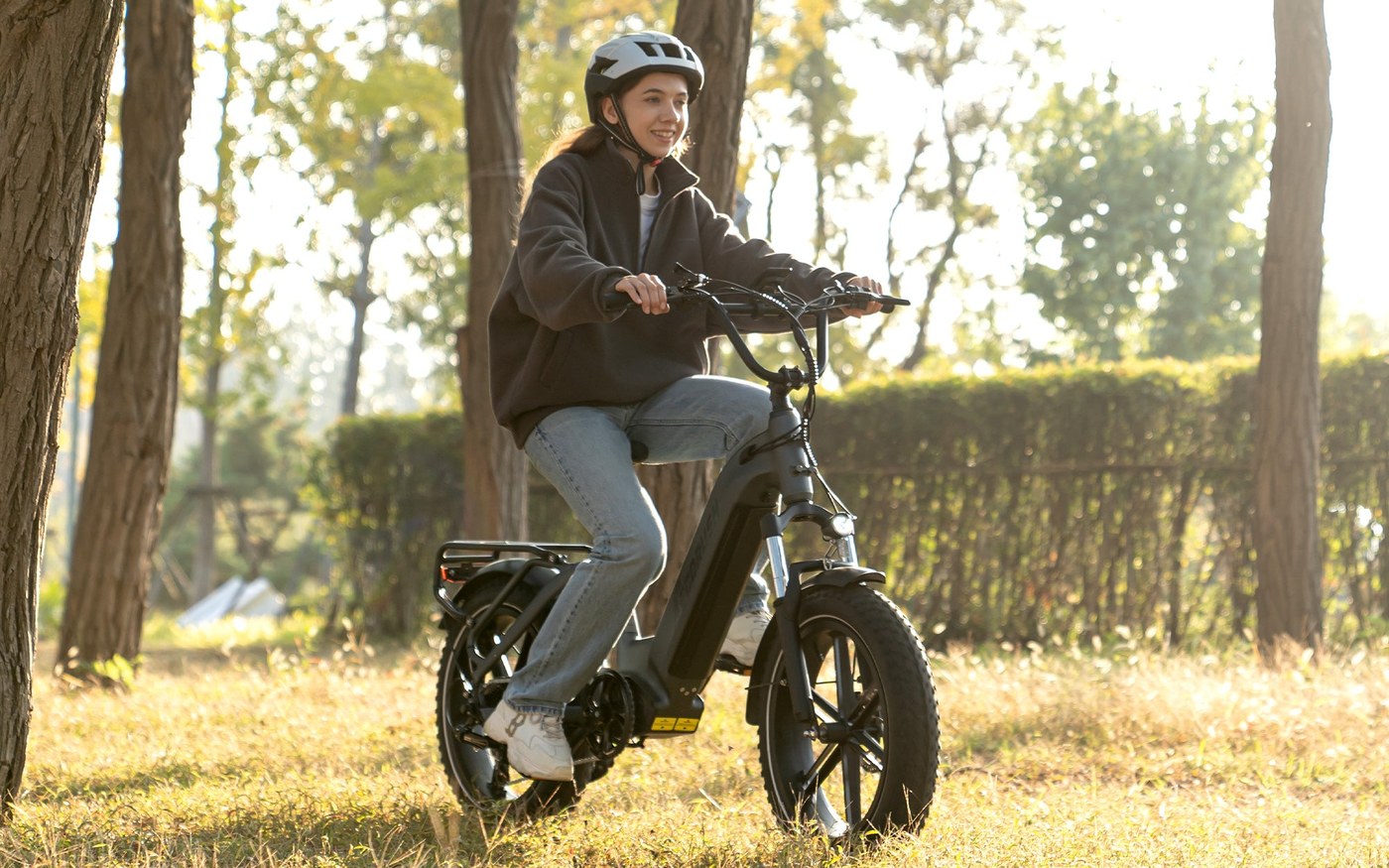
Safety advice is often given as a leaflet at the counter and forgotten by the time the customer reaches the door. A better approach is to make five points part of the handover conversation, demonstrated on the bike rather than read from a page.
1. Helmet fit, not just helmet ownership
Hold the helmet while the customer tries it. A certified helmet that sits too high or rocks forward offers far less protection. Two minutes of adjustment at the counter is more effective than any warning printed on a bag.
2. The rules that apply to this bike
Explain that an EN15194-compliant e-bike is treated like a bicycle: 250W, assistance up to 25 km/h and pedal-assist only. Clarify that it is not a moped and that it must not be ridden on pavements where local law prohibits it. New riders frequently misunderstand this, and the clarification belongs at the point of sale.
3. Being seen in low light
Demonstrate the front light and show where reflective elements sit on the bike and on clothing. European winter daylight is short, and many commuter accidents happen in the hours around dawn and dusk. Make lights part of the standard handover, not an optional accessory discussion.
4. Speed and spacing, especially near pedestrians
E-bikes accelerate faster than conventional bicycles and reach higher speeds with less effort. In shared spaces, mixed-use paths and near tram stops, that difference matters. Teach customers to modulate assist in crowded areas rather than relying on the motor’s cut-off.
5. A pre-ride check that takes thirty seconds
Brakes, tires, lights and battery level. Show the customer the check once and give them a short checklist to keep. Riders who perform it regularly develop confidence, and small faults are found before they become failures.
Safety education is not a warning. It is a service that makes the customer a more confident rider — and confident riders recommend the shop.
Make it repeatable
Print the five points on a single card, include it with every bike and require staff to walk through it at handover. Add a follow-up message after two weeks asking whether the customer is riding comfortably. That small step catches problems early and opens a service conversation naturally.
Support materials for dealers
Contact the ECORUSH B2B team for technical manuals and handover documentation for the full range.
Risks that are specific to electric bikes
E-bikes are heavier and accelerate faster than conventional bicycles. Both facts change how a rider should approach junctions, tram tracks and shared paths. Teach customers to brake earlier, to look further ahead and to reduce assist in crowded areas. These are driving skills, not technical knowledge, and they can be explained in a few minutes.
Battery weight also changes the consequences of a fall. A rider lifting a bike over a kerb or loading it into a car should be shown how to handle the frame rather than the saddle or the display. Demonstrate it once at collection.
Turn the handover into a repeatable script
Give each member of staff the same five-point handover and require it to be ticked off. Consistency matters: a customer who hears different advice from two salespeople will trust neither. Keep the language plain and demonstrate each point on the bike rather than reading from a sheet.
Add the customer’s name and the date to the checklist. It becomes a record that the advice was given and a useful reference if the customer returns with a question months later.
Use community rides as safety training
A guided ride is the safest place to practise junction awareness, signalling and speed control. Invite new owners to a short monthly ride on quiet roads, with an experienced rider at the front and one at the back. The event builds confidence, answers questions and introduces the shop to potential customers who come along as friends.
Keep the route predictable and the pace gentle. The aim is repetition in a relaxed setting, not performance.
What to check before a long weekend trip
- Tyre pressure and casing condition for the surface expected at the destination.
- Brake feel after the bike has been loaded with luggage.
- Lights charged and mounted so they remain visible with a pannier fitted.
- Battery charge and charger packed — not left at home.
- A basic tool kit and a spare tube sized for the bike’s wheels.
Send this list by email to customers before holiday periods. It is useful, takes little effort and generates service bookings when something is found.
Link safety advice to the right product
A customer who rides mostly at night needs a reliable light and fenders more than extra power. A rider carrying a child needs a stable step-through frame and a rear rack. Match the advice to the use case, and the recommendation for an all-weather long-range commuter follows naturally rather than sounding like an upsell.
Looking for a reliable e-bike partner?
Explore our CE/EN15194 certified lineup and factory-direct B2B pricing.