

Fat tires are easy to photograph and easy to oversell. The useful conversation is narrower: what does a 4.0-inch tire actually change for a rider in ordinary European conditions?
What tire width really does
A 4.0-inch tire run at lower pressure creates a larger contact patch. In practice that means more float on sand and snow, more grip on loose gravel and better damping on cobbles or broken asphalt. It does not make a bike immune to punctures, and it adds rolling resistance on smooth tarmac — a fair disclosure builds more trust than ignoring it.
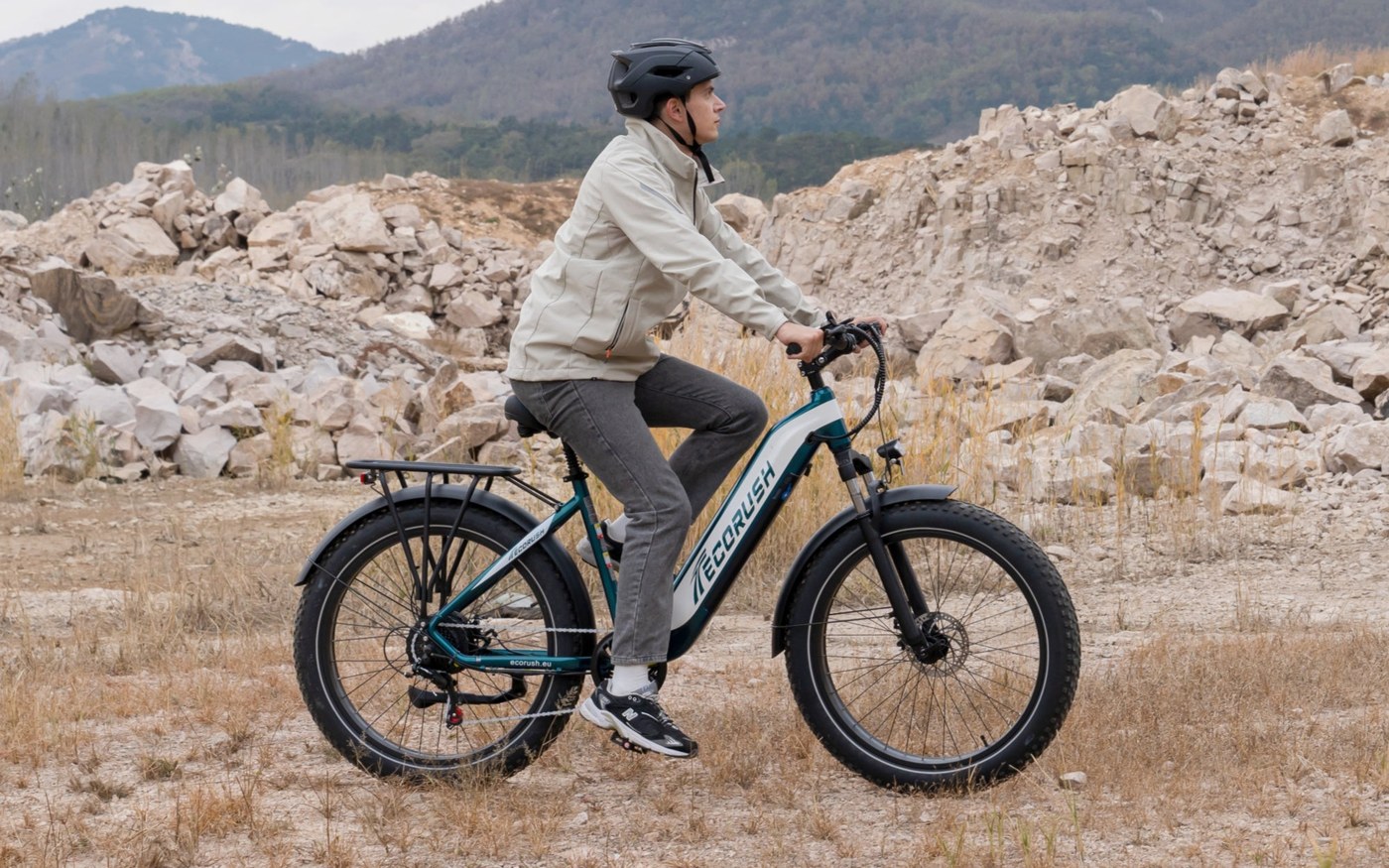
All ECORUSH all-terrain models use puncture-resistant wide tires: 20×4.0 on the R2 and R6, 26×4.0 on the R1 and R3.
Four seasons, four demonstrations
- Spring: wet gravel paths and muddy towpaths. The wider tire stays composed where a narrow one washes out.
- Summer: sand, forest tracks and campsite ground. This is where low-pressure tires feel obviously different.
- Autumn: wet leaves and tram rails. Contact patch and predictable steering matter more than speed.
- Winter: grit, slush and short daylight. Pair the tires with a front light and a bike rated for wet use — the R1 carries an IP54 rating.
Match motor torque to the terrain
Wide tires plus a weak motor is a heavy, slow bike. The R1 and R3 pair their 26×4.0 tires with a 250W hub motor producing 58Nm and a 624Wh battery for 50-100 km of range. The R3 is rated for climbs up to 25 degrees. That combination is what makes all-terrain claims credible rather than decorative.
For longer days in the saddle
The R6 takes a different approach: 20×4.0 tires, a step-through frame, front suspension and a 748.8Wh battery for 70-120 km. It is the all-terrain argument for comfort-focused riders who want to explore further without a performance bike.
Positioning advice for dealers
Lead with the conditions your customers actually ride in. A wet northern city and a dry southern coastal town need different demonstrations. Keep a tire-pressure gauge at the counter and show riders how pressure changes the feel — it is a small detail that signals real expertise.
Sell the surface, not the silhouette. When a customer can picture their own route, the fat-tire specification becomes obvious.
Request the full specification set
To compare tire, motor and battery configurations across the ECORUSH range, contact our B2B team.
Tire pressure is a setting, not a fixed value
One of the most useful things a dealer can teach a fat-tire rider is how pressure changes the bike. Lower pressure increases the contact patch and improves float on sand or snow; higher pressure reduces rolling resistance on smooth tarmac. A rider who uses one pressure everywhere will never get the best from the tires.
Print a small pressure guide for the shop wall and keep a gauge at the counter. When a customer collects the bike, set the pressure for the surface they described and explain what to change for winter. This is a small service that creates a lasting impression.
Studded tires and the winter question
In northern markets, studded tires turn a fat-tire bike into a genuine winter vehicle. They are not necessary everywhere, but riders who face ice for weeks at a time should know the option exists. Check local rules: some cities require them for certain cycles lanes, while others restrict studded tires on particular surfaces.
The wide rim and 26×4.0 format on models such as the high-torque all-terrain e-bike accept a range of tire types. Offering a winter tyre option turns one bike into a year-round purchase and gives the workshop a seasonal service opportunity.
What wide tires do to range
Honesty here prevents disappointment. Wide, soft tires create more rolling resistance than narrow racing tires, so a fat-tire bike will usually cover less distance on smooth asphalt than its battery capacity suggests. The benefit is grip and comfort on surfaces where a narrow tire would be slow or unsafe.
Explain this as a trade-off rather than a defect. A customer who expects 120 km of fast tarmac riding from a fat-tire bike has misunderstood the product; a customer who wants a stable, comfortable bike for mixed surfaces will be delighted by the same specification.
How to demonstrate all-terrain capability legally
You do not need a mountain to show what a fat tire does. A section of wet cobbles, a gravel verge or a tram track near the shop makes the point. Ride it at walking pace with the customer watching, then let them try. The difference in stability is visible and does not require technical language.
Finish the demonstration by checking tire pressure together. It reinforces the idea that the bike is adjustable to conditions, not a fixed product that either suits the rider or does not.
Securing a bike that lives outdoors
Fat-tire bikes are visible and desirable, which makes theft a genuine concern. Recommend a lock that secures both frame and wheels to a fixed point, and advise the rider to take the removable battery indoors. On models with a lockable battery, show the mechanism at handover so the customer uses it from day one.
Photographing the serial number and storing it with the service record helps if a bike is recovered. It is a two-minute step that dealers should offer routinely.
Looking for a reliable e-bike partner?
Explore our CE/EN15194 certified lineup and factory-direct B2B pricing.