

Riders rarely walk into a shop asking for watt-hours. They arrive with a problem: the journey to work is too far to cycle comfortably, parking is expensive, or they want to arrive without changing clothes. The dealer’s job is to translate those problems into specifications.
“I don’t want to arrive sweaty” → pedal-assist control
This is the most common objection to commuting by bike and the easiest to demonstrate. Let the customer ride the same route in two assist levels. A 250W system with well-tuned pedal assistance removes the effort spike at hills and traffic lights without turning the ride into a motorcycle experience.
For the shop, that means demonstration bikes must be charged, set up and available. A test ride closes more sales than any specification sheet.
“I have nowhere to store it” → folding and removable parts
Apartment living and shared entrances make storage a genuine barrier. Folding frames such as the ER10S and ECO R2 address it directly. A removable battery is the second half of the answer: it can be charged indoors and, importantly, carried away from the bike.
“My journey is too long” → usable range, honestly explained
A 499Wh battery covers most daily urban trips. A 748.8Wh pack, as fitted to the R6, supports 70-120 km depending on terrain and assist level. Rather than quoting a single maximum figure, ask the customer about their route, the number of trips per week and whether they can charge at work. Then recommend a capacity that fits — not the biggest one on the wall.
“I ride in all weather” → tires, lights and protection
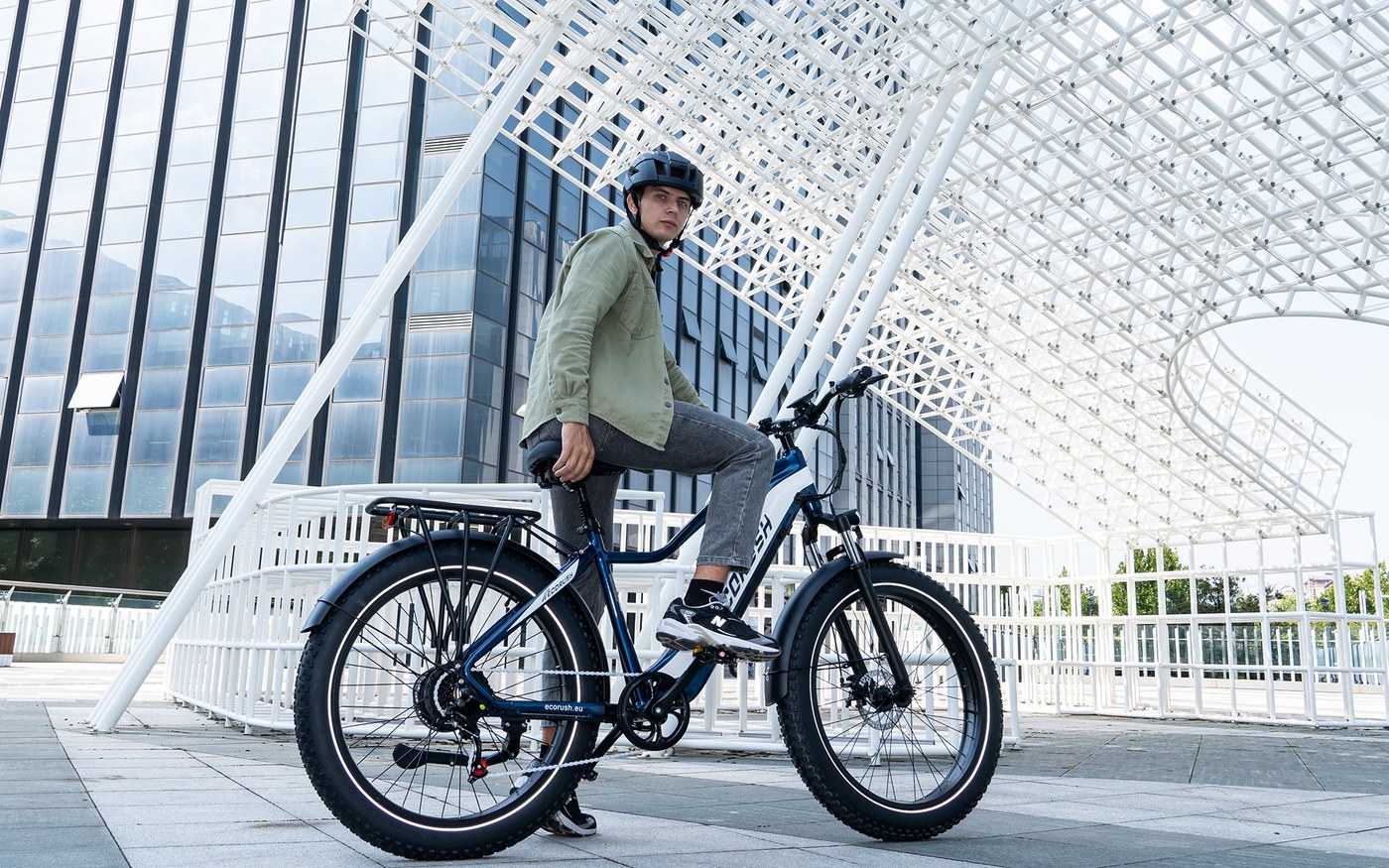
European commuting means wet roads, tram lines and grit. Wide puncture-resistant tires, a front light, a rear rack and an IP54 rating on models such as the R1 are practical answers that customers understand immediately. These features also reduce the number of “it doesn’t suit my conditions” objections.
The wider benefits still matter
Regular cycling supports cardiovascular health, reduces stress and removes fuel and parking costs. Riders know this; they simply need the practical barriers removed first. Lead with the barrier, then confirm the benefit.
A good sales conversation starts with the customer’s journey, not the bike’s spec sheet. Match the feature to the objection and the specification sells itself.
Build your sales around real journeys
Map your local commuting routes, keep a charged demonstrator ready and train staff to ask about storage and charging before discussing motors. To source bikes that fit those conversations, speak with the ECORUSH B2B team.
Employer schemes and incentives are worth understanding
In several European markets, salary-sacrifice arrangements and local purchase incentives reduce the effective cost of a commuter e-bike. The rules differ by country and change over time, so dealers should check current conditions before quoting a final price. A shop that can explain the paperwork becomes the obvious choice for an employer considering a fleet.
Keep a simple file for each market you serve: eligible products, documentation required and the name of the local scheme. When an HR manager calls, you can answer in one conversation rather than three.
A winter commuting kit that removes objections
Wet and dark conditions stop more commuters than distance does. Build a practical kit list and train staff to recommend it at the point of sale:
- Front and rear lights with sufficient runtime for the shortest daylight days.
- Fenders that actually cover the rider, not just the frame.
- A waterproof pannier rather than a backpack that leaves the rider damp.
- Low-pressure tires with a puncture-resistant casing for grit and tram rails.
- Layered clothing that can be adjusted after the first ten minutes.
None of this is glamorous, but each item answers a reason someone stops riding in November.
Help customers measure the business case
Some buyers need a rational justification. Ask for their current weekly fuel and parking spend, then compare it with charging and maintenance. For many urban commuters the payback is measured in years rather than months, but the calculation also includes time saved in traffic and the absence of a gym membership. Present it as a range, not a promise.
Choose the bike around the journey, not the image
A rider doing five kilometres from a small apartment does not need a 748.8Wh battery; they need a bike that folds and charges indoors. The compact folding commuter exists for that brief. A rider crossing town twice a day with no charging at work has a different problem, and a long-range model is the honest recommendation.
Dealers who start with the journey and finish with the specification close more sales and see fewer returns. The customer feels understood rather than sold to.
Where the battery lives matters
A rider who cannot charge at home needs a different recommendation from one who can. Ask where the bike will be parked during the working day and whether a socket is available at the office. A removable battery turns a locked ground-floor space into a viable charging point, provided the rider can carry it indoors.
For shops near business districts, this question opens a practical conversation about office charging and spare chargers — a small accessory sale that solves a real problem.
Looking for a reliable e-bike partner?
Explore our CE/EN15194 certified lineup and factory-direct B2B pricing.