

Road cycling has always asked a lot of beginners: fitness, confidence in traffic and a willingness to suffer through the first few climbs. Pedal assistance reduces the first of those barriers, and that has consequences worth understanding — including a few that dealers need to explain carefully.
Assistance changes who can join
A rider with moderate fitness can now complete a route that previously required months of training. The motor helps on climbs and into headwinds, which means group rides become more inclusive and a weekend outing can cover more ground. For dealers, that widens the customer base beyond traditional sports cyclists.
It also changes training
For experienced riders, adjustable assist levels offer a way to control effort precisely. A steady low-assist ride builds volume without excessive strain; a higher setting allows a faster group to stay together. Assistance is a tool, not a shortcut — a point worth making to customers who worry it removes the benefit.
The regulatory line dealers must respect
In Europe, an EN15194-compliant e-bike has a 250W continuous rated motor, assistance that stops at 25 km/h and pedal-assist only. It is treated like a conventional bicycle. Bikes with higher power or throttle capability fall into the speed-pedelec or moped category, with different rules on registration, insurance and where they may be ridden.
Never blur that distinction in a sales conversation. A customer who believes “it’s just an e-bike” and later discovers different road rules will blame the shop. Describe the 25 km/h cut-off explicitly at handover.
What this means for stocking decisions
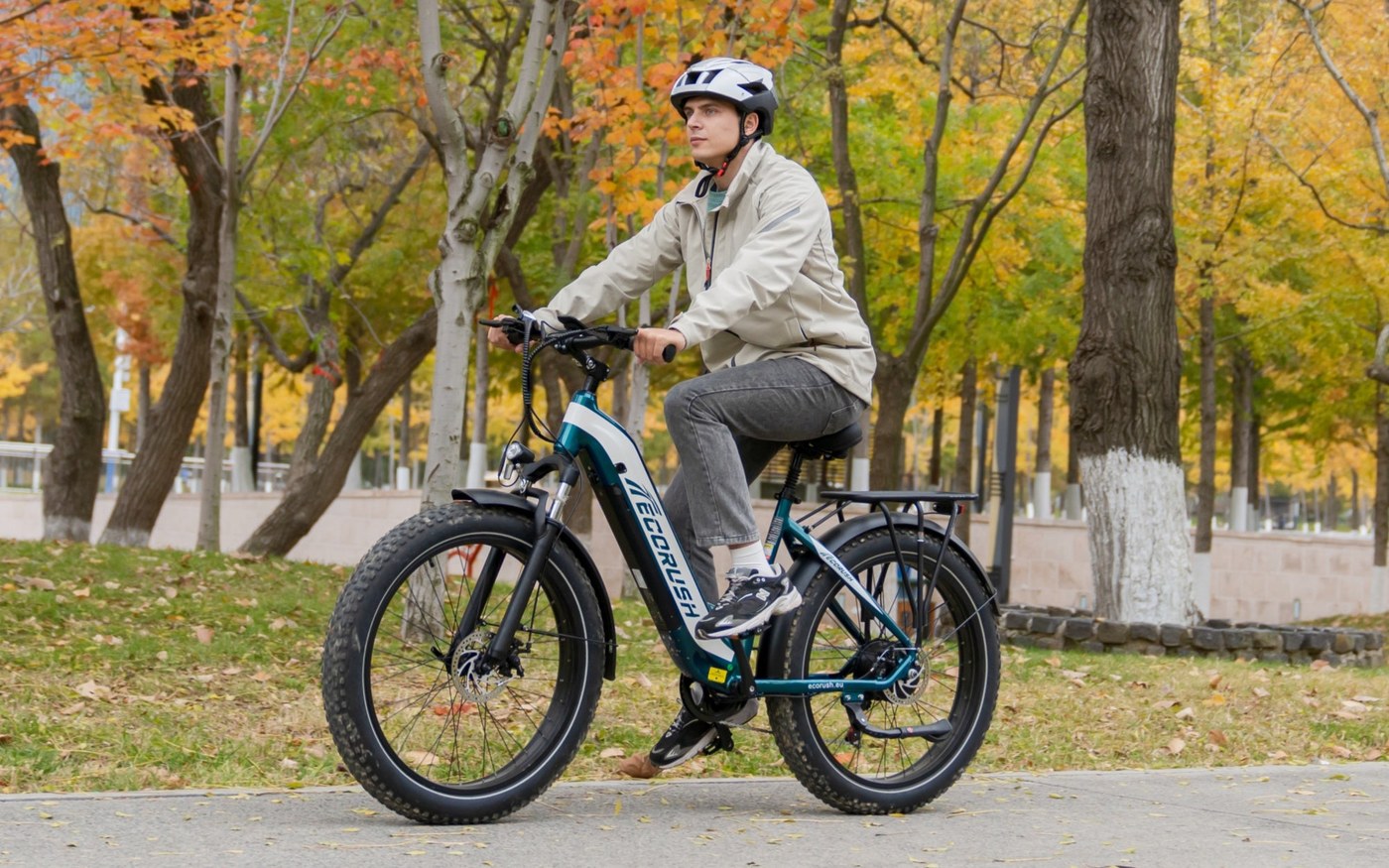
Not every dealer should chase road-specific models. The strongest demand in most European markets remains practical: commuters, mixed-surface riders and people returning to cycling after years away. A versatile fat-tire model with a 250W motor and a comfortable geometry often serves that rider better than a narrow-tire performance bike — and is easier to demonstrate in an urban showroom.
A better conversation at the counter
Ask customers what they want to do, not how fast they want to go. “Ride with my partner”, “get to work without a shower” and “explore routes beyond the city” are requests a dealer can answer with a specific bike. “Fastest one you have” is rarely a useful starting point.
Electric assistance does not remove the joy of cycling. It removes the reasons many people never started — provided the rules are explained honestly.
Talk to us about rider fit
ECORUSH models cover commuting, folding and all-terrain use with EN15194-compliant 250W systems. Contact the B2B team to discuss which platforms fit your customer base.
EPAC and speed pedelec are not the same category
This distinction causes more confusion than any other topic at the counter. An EPAC built to EN15194 has a 250W continuous rated motor, assistance that stops at 25 km/h and no throttle-only mode. It is generally treated like a conventional bicycle. A speed pedelec can assist at higher speeds and usually falls into a different regulatory class with requirements for registration, insurance, helmets and where it may be ridden.
Never let a customer leave the shop unclear about which one they own. Say the 25 km/h cut-off out loud during handover and point to it on the display. It protects the rider and protects the business.
How to build a group ride that grows the customer base
Dealers can use assisted riding to bring together riders of different abilities. Choose a route with a cafe stop, keep the pace conversational and set a rule that nobody is dropped. New riders discover that they can complete a distance they previously avoided, and they associate that experience with the shop.
Invite owners to bring a friend who does not yet own an e-bike. A guided ride is a demonstration in the best possible setting, with no pressure and plenty of time to ask questions.
Assistance as a training tool
Riders who use assist levels deliberately can control training intensity more precisely than on an unassisted bike. A low-assist climb builds strength; a higher setting on the return leg allows recovery. Explain this to customers who worry that assistance removes the exercise benefit — the exercise is still there, and it is adjustable.
For dealers, this opens a useful conversation about cadence and gear selection. Many new riders stay in one gear and let the motor compensate. Teaching them to shift improves the ride and reduces load on the drivetrain.
Choosing a versatile bike instead of a narrow one
Most customers who ask about road riding actually want something broader: the ability to cover longer distances comfortably, handle mixed surfaces and occasionally ride with faster friends. A dedicated road model is not always the best answer. An all-terrain e-bike with 26×4.0 tires covers city streets, gravel paths and weekend routes without requiring a second bike.
Ask what proportion of riding would be on perfect tarmac. If the honest answer is “not much”, a versatile model will make them happier.
A better closing question
Instead of asking “How fast do you want to go?”, ask “Where would you like to be able to ride?” The second question produces an answer a dealer can work with — a coastal path, a hill district, a route to a neighbouring town. It also keeps the conversation away from illegal modifications, which no dealer should entertain.
Looking for a reliable e-bike partner?
Explore our CE/EN15194 certified lineup and factory-direct B2B pricing.