

City e-bikes are bought with two parts of the brain at once. The customer responds to the bike’s appearance in the showroom, then runs a practical checklist in their head: can I carry shopping, will it fit my route, can I leave it outside? A model that wins only one of those comparisons stays on the floor.
What “good design” means in practice
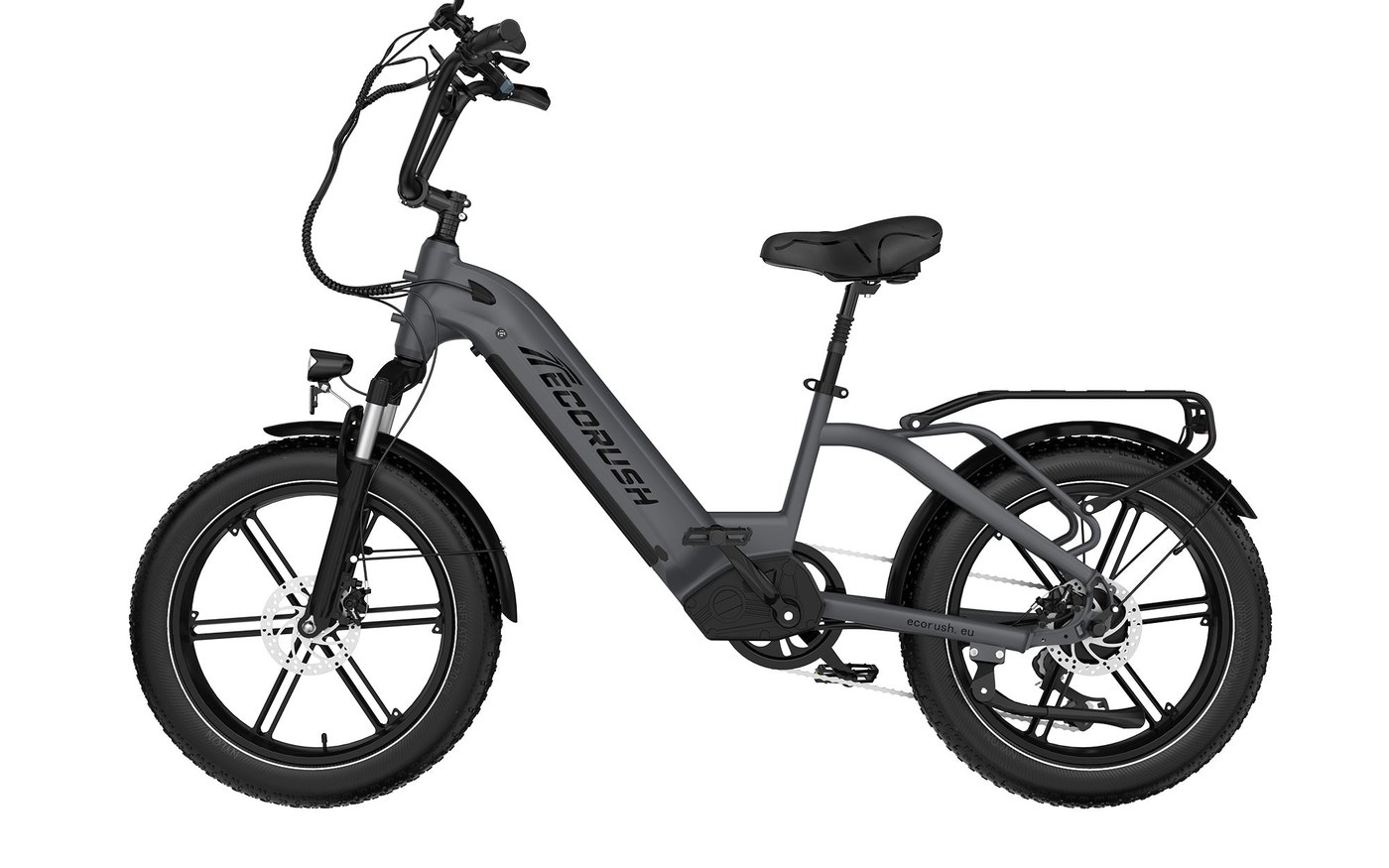
Clean frame lines, coherent colour and visible build quality do more than look pleasant. They signal to a buyer that the manufacturer cared about the rest of the bike too. A step-through frame is a good example: it solves a real access problem and, in the R6, does so without looking utilitarian.
The utility checklist
- Rear rack: the single most underrated commuter feature. It changes what the bike can do.
- Front light: required in many markets and useful in winter daylight.
- Fenders: decisive for riders who commute in suits or dresses.
- Display: speed, battery level and assist mode should be readable at a glance, not a menu exercise.
- Tires: puncture-resistant 20×4.0 tires handle wet cobbles and tram tracks with more confidence than narrow racing tires.
How the R6 brings the two together
The ECO R6 combines a step-through frame with front suspension, a suspension seat post, a full-colour LCD, a rear rack and a front light. Its 748.8Wh battery supports 70-120 km, and the 250W motor keeps it within EN15194 limits. The result is a bike that reads as considered rather than merely equipped — an important distinction in a showroom where customers compare by eye first.
Display it the way customers use it
Put a bag on the rack. Turn the light on in the showroom. Let the customer sit on the bike and read the display. Small staging decisions turn an abstract list of features into a picture of the customer’s own morning commute.
Avoid the styling trap
A beautiful bike with no rack, no fenders and a high-step frame may attract attention but fail the practical test. Conversely, a purely utilitarian bike rarely creates desire. The products that sell consistently sit in the middle: restrained styling with the everyday equipment already fitted.
Design earns the look. Equipment earns the order. Dealers should insist on both.
See the range
To review city and commuter models with full specification details, contact the ECORUSH B2B team.
Colour and finish are commercial decisions
Dealers often underestimate how much finish affects sell-through. A restrained palette — deep blue, warm grey, graphite — works across markets and ages well. Bright seasonal colours can create urgency but are harder to resell second-hand and may date quickly. Choose colours that complement the store and the brand rather than following a short-lived trend.
Keep one distinctive colour for the demonstration bike. It makes the model recognisable in the showroom and in social media photos, without forcing the whole stock into a risky option.
Ergonomics for different riders
A city bike is used by people of very different heights and physical confidence. Check saddle range, handlebar reach and standover height before recommending a model. A rider who cannot place both feet flat at a stop will not relax in traffic, however good the specification looks on paper.
Adjust the bike in front of the customer at collection. Small changes to saddle height and bar angle transform the first impression and signal that the shop pays attention to fit.
Accessory compatibility is part of design
A rack that cannot take a standard pannier is a decorative feature. Check the declared load, the rail width and whether the light sits above or below the rack. Make sure fenders can be fitted without removing the rear light, and that a child seat can be mounted safely on the chosen frame.
These details are what turn a good-looking bike into a useful one. They are also easy to demonstrate: bring a real pannier and a child seat to the showroom and fit them on the bike.
Explain the electric part quietly
Customers attracted by design often feel overwhelmed by technical detail. Let the visual decision happen first, then introduce the motor and battery in plain language. “A 250W assist system that stops helping at 25 km/h, and a battery you can take indoors” is enough for most buyers.
Those who want more will ask. For them, the 748.8Wh step-through e-bike offers a full-colour display, a rear rack and a specification that rewards a closer look.
Stage the bike as a daily object
A city bike sold as a machine competes with other machines. A city bike shown with a bag on the rack, a coat over the handlebar and a cup holder in the cage becomes part of a morning routine. Small staging choices help customers picture their own life with the product — which is the real decision they are making.
Looking for a reliable e-bike partner?
Explore our CE/EN15194 certified lineup and factory-direct B2B pricing.