

Range figures are easy to print and hard to interpret. The ECO R6’s 748.8Wh battery is worth examining in terms of what a customer can realistically do with it, because that is what determines whether the bike earns its place in a dealer’s range.
The specification, in plain terms
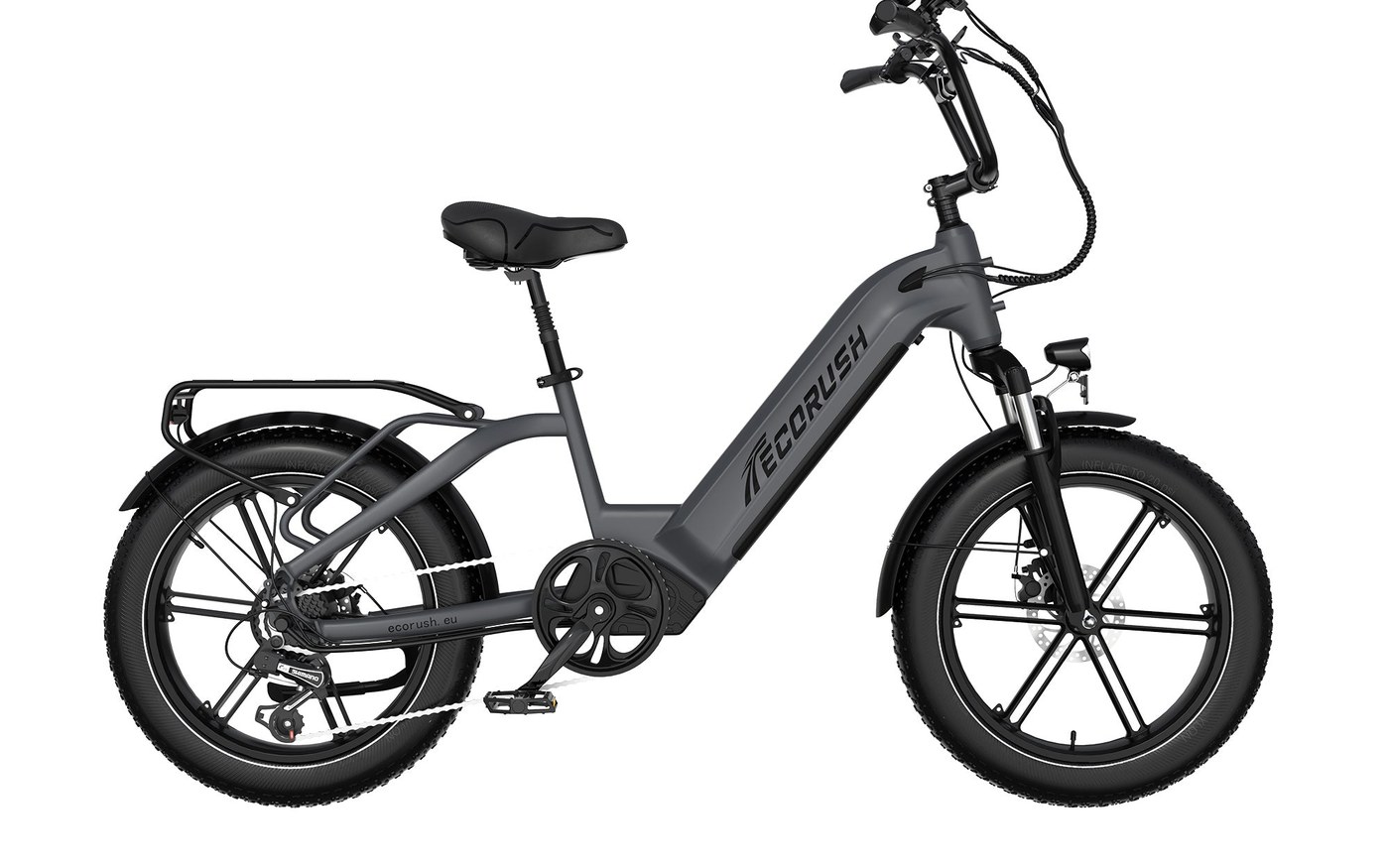
The R6 uses a 48V 15.6Ah removable battery rated at 748.8Wh, with a quoted range of 70-120 km. A 250W motor provides pedal assistance up to 25 km/h, in line with EN15194. The battery is removable and lockable, so it can be charged indoors and taken with the bike.
What 70-120 km means for a customer
A commuter covering 20 km a day can ride for most of a week between charges. A rider doing a 60 km weekend route can complete it without planning around charging stops. That is the practical difference between this pack and the 499Wh unit in the R2: fewer charging decisions, not just a bigger number.
The honest caveat is that range moves with terrain, temperature and assist level. Winter riding and sustained hills will pull the result towards the lower end. Dealers who explain this upfront are trusted with the more expensive purchase.
A long-range bike that is uncomfortable to sit on will not be ridden far. The R6 uses a step-through frame, front suspension fork and suspension seat post, with a full-colour LCD display showing speed, battery level, assist mode and distance. It also includes a rear rack and front light, so it works as a commuter on day one.
Where it sits in the range
The R6 is not a performance bike. It is a comfort-first, long-distance commuter with 20×4.0 puncture-resistant tires that handle city streets and light gravel. Positioned beside the R2, it answers the customer who says “I like the folding bike, but my journey is longer”. Positioned beside the R1 and R3, it answers the customer who wants capability without a high-step frame.
Who should you demonstrate it to?
- Commuters with a round trip over 30 km or no charging at work.
- Older riders who want easy mounting and a relaxed position.
- Leisure riders who want a single bike for errands and weekend routes.
Dealer notes
Keep the R6 charged as a demonstrator and let customers sit on it before discussing battery capacity. The step-through frame usually sells itself; the battery then confirms the decision.
The R6 is not about going faster. It is about removing the reasons a customer stops riding — distance, comfort and charging.
Ask for dealer pricing
Contact the ECORUSH B2B team for R6 pricing, colour options and sample availability.
How to run a sensible range test
Dealers who want to make credible claims should test in conditions they can describe. Start with a full charge, record the rider weight, the route, the average assist level and the temperature. Ride until the battery reaches the low-state warning, then note the distance. Repeat on a second day with a different route.
Two results are more useful than one. A single maximum figure tends to be quoted without context; a range — for example, a city route returning one number and a hilly route returning another — tells a customer what to expect. The 748.8Wh battery in the R6 is capable of 70-120 km, and the difference between those figures is exactly the story a good salesperson should tell.
Why the step-through frame sells without a speech
Ask a customer to swing a leg over a high-step bike and then over a step-through frame. In many markets a large share of buyers prefer the second motion, whether because of mobility, clothing or cargo. The frame solves a physical problem before any specification is discussed.
It also changes where the bike can be used. A rider who carries a child seat, a shopping basket or a dog in a front basket values easy mounting several times a day. Demonstrate the R6 with a bag on the rear rack and the advantage becomes obvious.
Charging habits for long-range owners
Owners of large batteries often fall into one of two habits: charging after every short trip, or running the pack almost flat. Neither is ideal. Explain that keeping the battery roughly between 20% and 80% during normal weeks preserves cycle life, and that a full charge before a long weekend is perfectly reasonable.
Because the pack is removable, indoor charging is straightforward. Recommend a regular charging day rather than leaving it to chance — a rider with a fixed routine rarely gets caught out.
Positioning against the rest of the range
The R6 should not be presented as a better R2. It is a different answer. The folding commuter with a 499Wh battery wins on storage; the R6 wins on distance and comfort. A customer with a small apartment and a ten-kilometre commute may genuinely be better served by the smaller bike.
Saying so builds trust. When the same customer later changes job or moves further out, they will return to the dealer who gave honest advice rather than the one who pushed the most expensive model.
Service notes for the long-range buyer
Long-distance riders put more hours on the drivetrain and brakes than typical commuters. Recommend a service interval based on distance rather than calendar time, and check brake pads and chain wear at every visit. These customers ride in all seasons, so fenders and a reliable light set are part of the package, not extras.
Looking for a reliable e-bike partner?
Explore our CE/EN15194 certified lineup and factory-direct B2B pricing.