

Most dealer ranges fail in one of two ways: too many similar bikes competing for the same customer, or too few to cover the questions buyers actually ask. A three-tier structure keeps inventory manageable while giving sales staff a clear conversation to have.
Start with the rider, not the catalogue
Write down the three customer types your store sees most often. For most European dealers they are: the daily commuter who wants a bike that works in any weather, the household looking for a second vehicle, and the rider who wants capability beyond paved roads. Each needs a different answer on frame style, tire width and battery size.
Tier 1 — the entry model that starts the conversation
The entry bike’s job is to get a customer into the category without a long deliberation. It must look complete, feel easy to ride and carry a price that does not require financing.
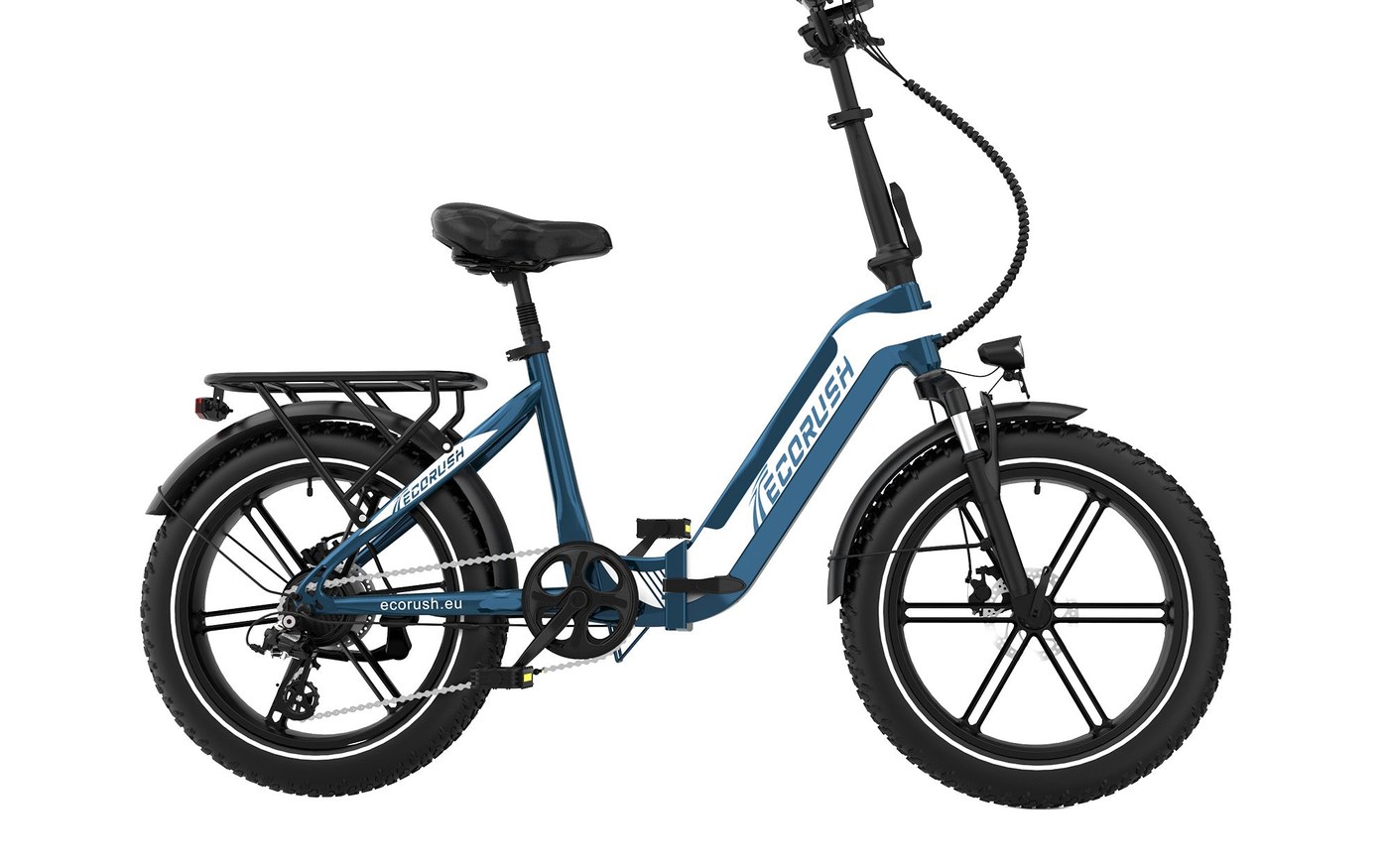
The ER10S fits this role: a 20×4.0 folding fat-tire bike at an accessible price point. It demonstrates well because the folding mechanism and wide tires are visible benefits a customer can understand in under a minute.
Tier 2 — the core models that carry margin
This is where most of your volume and profit should come from. Two models usually cover it:
- ECO R2 — 499Wh battery, up to 100 km range, folding aluminium frame, front suspension and suspension seat post. A strong fit for apartment dwellers and multimodal commuters.
- ECO R6 — 748.8Wh battery, 70-120 km range, step-through frame, full-colour LCD and rear rack. The answer for longer journeys and riders who prioritise comfort.
Both are complete commuter specifications out of the box. That matters: a bike needing three accessory add-ons before it can be ridden to work creates friction at the point of sale.
Tier 3 — the capability flagship
The flagship does not have to sell in volume. It sets the store’s expertise level and gives ambitious riders something to aspire to. The R1 and R3 share a 250W hub motor with 58Nm of torque, 624Wh battery and 26×4.0 puncture-resistant tires; the R3 is rated for climbs up to 25 degrees. Both carry an IP54 water-resistance rating, which is an easy, credible talking point in a European climate.
Check the commercial details before you commit
- Certification matches the exact model and motor you are ordering.
- Spare parts are stocked and can be ordered in small quantities.
- Warranty terms are written down, including who pays labour.
- MOQ is low enough that a slow-selling SKU does not trap cash.
Keep the range small on purpose
Five well-chosen models with clear roles will outsell fifteen overlapping ones in most stores. Sales staff can remember the differences, demonstration bikes stay available, and parts inventory remains predictable. To discuss building a range around the ECORUSH lineup, talk to our B2B team.
Model the stock before you sign the order
A range plan should survive a slow quarter. Before committing, write down a conservative weekly sales estimate for each tier and multiply it by four to get a minimum stock level. Then check how long your cash is tied up if a model sells at half that rate. A dealer who can answer this question will avoid the most common mistake: a beautiful range that cannot be financed.
Entry models usually turn fastest because the decision is simpler. Core models generate the margin but need more explanation. Flagships may sit in stock for longer and should be ordered in smaller numbers or kept as demonstration units.
One charged demonstrator per tier will sell more bikes than any brochure. For a folding model, the demonstration should include folding the bike, lifting it and rolling it through a doorway. For a long-range commuter, let the customer sit on it and read the display. For an all-terrain model, find the roughest legal surface near the shop and ride it there.
Keep a simple log of every test ride: customer type, questions asked and whether a sale followed. After a month the pattern becomes obvious, and the range can be adjusted on evidence rather than instinct.
A seasonal buying calendar that works in Europe
Demand for commuter bikes rises in spring and again in early autumn when daylight changes. Folding models sell steadily because storage needs do not disappear in winter. All-terrain bikes often peak before summer holidays, when buyers imagine campsite and trail use.
Order far enough ahead that stock arrives before the first demand peak, and leave room for a mid-season top-up of the model that actually sells. Rigid annual plans tend to miss both.
Build the upgrade path into the conversation
A customer who buys an compact folding e-bike today may return two years later for more range. If your range includes a folding model with a 499Wh battery and a step-through long-range option, that customer has somewhere to go without leaving the brand. Tell them at the point of sale which model comes next and why. Honest upgrade advice creates loyalty; pretending the first bike does everything damages it.
Looking for a reliable e-bike partner?
Explore our CE/EN15194 certified lineup and factory-direct B2B pricing.