


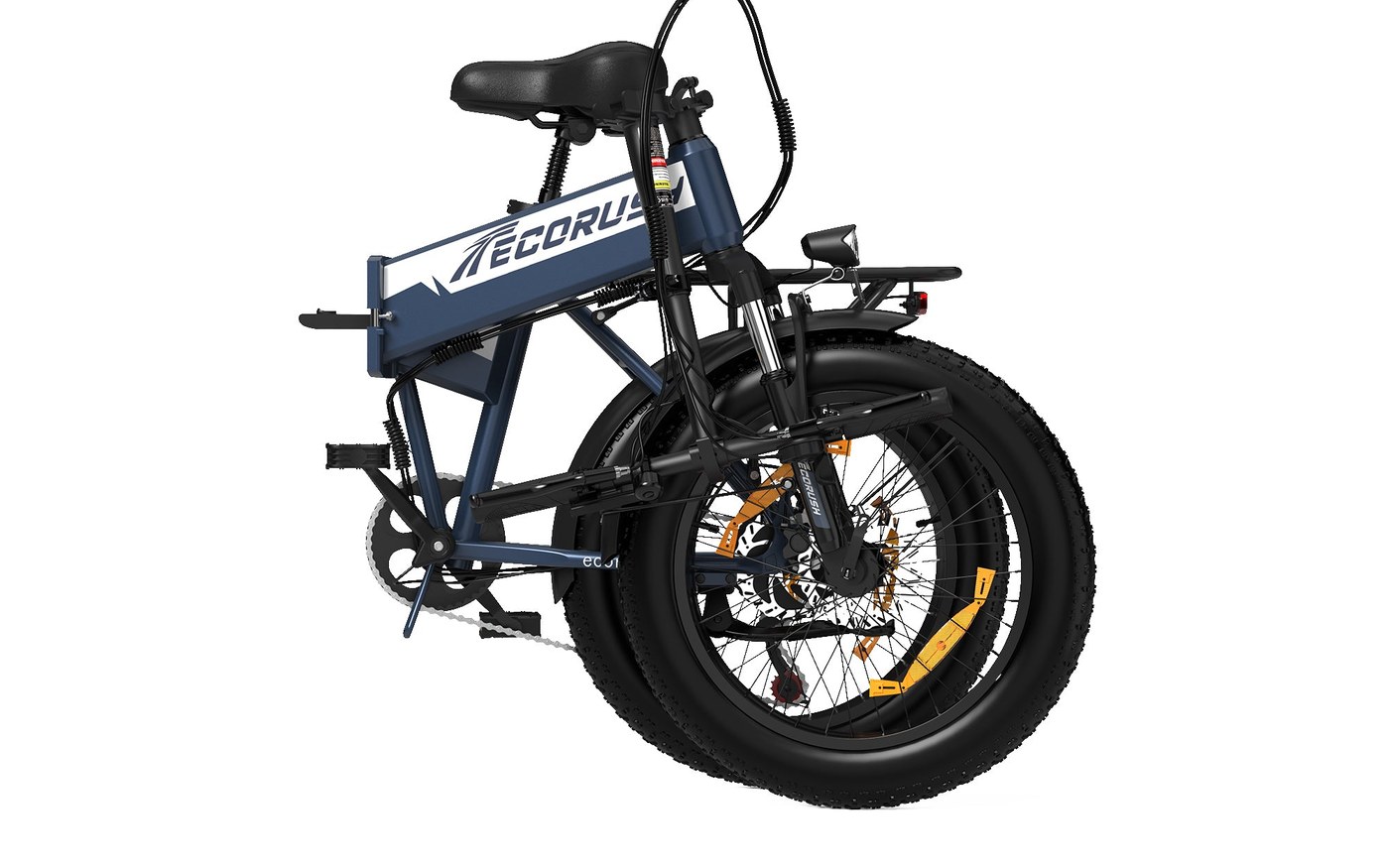
Most motor warranty claims are not manufacturing defects. They are the result of heat, water ingress and loose connections — all preventable with a handful of service habits. For a dealer, every prevented claim protects margin and reputation at the same time.
1. Explain assist levels at handover
New riders often leave the bike in the highest assist setting permanently. On long climbs with a heavy load, that keeps the motor near its limit for extended periods. Teach customers to shift down and use lower assist levels on sustained gradients. It is a two-minute conversation that prevents a large share of heat-related complaints.
2. Set expectations about water
Models such as the R1 carry an IP54 rating, which means protection against dust ingress and splashing water — not pressure washing. Tell customers explicitly: ride in the rain, wipe the bike dry afterwards, and never aim a pressure washer at the motor or controller housing.
3. Check connectors at every service
Vibration loosens plugs over time. A connector that is partly disengaged creates intermittent faults that are difficult to diagnose remotely. Make a visual and tactile check of motor and controller connections part of every scheduled service. It takes minutes and removes a whole category of mystery failures.
4. Insist on the correct charger
Chargers are one of the most commonly substituted accessories. A non-certified charger can damage the battery management system, and the resulting fault is sometimes misdiagnosed as a motor problem. Sell the correct charger with the bike and explain why substitutes are a false economy.
5. Build a service interval into ownership
Recommend an inspection every 1,000-2,000 km covering the motor, bearings, brakes and drivetrain. Dealers who schedule that visit create a predictable service revenue stream and catch small problems before they become warranty claims.
Reliability is partly engineered and partly explained. The dealer who explains it well sees fewer returns and more repeat customers.
Make the message consistent
Put these five points into your handover checklist and train every member of staff to say the same thing. Consistency is what turns individual advice into a reputation for expertise.
Technical support from ECORUSH
ECORUSH supplies spare parts and technical documentation to dealer partners. Contact the B2B team for service manuals and warranty procedures.
Understanding fault codes before calling the supplier
Most modern controllers report faults through the display or a diagnostic connector. A dealer who can read and interpret those codes resolves many issues without a parts shipment. Keep a fault-code sheet for every model you sell and update it when the manufacturer issues new firmware.
Teach customers what a fault code looks like and ask them to photograph the display before calling. A clear photo saves a round of questions and often reveals whether the problem is a loose connector, a sensor issue or a battery communication error.
After the winter: cleaning without causing damage
Road salt is more damaging than rain. After a winter of commuting, the drivetrain and the area around connectors need careful cleaning. Use a soft brush and damp cloth around the motor housing; avoid soaking the bike or using a pressure washer. A thorough clean at the end of winter prevents corrosion that would otherwise appear as an electrical fault months later.
This is an ideal service campaign: invite customers to book a winter check in early spring, when they are starting to ride again and before a small problem becomes a failed component.
When to replace rather than repair
Some components are cheaper to replace than to diagnose repeatedly. A display with intermittent faults, a worn cadence sensor or a damaged cable harness can consume more workshop time than the part is worth. Set a threshold: if diagnosis exceeds the cost of the component, replace it and move on.
Document the decision on the repair order. Over time these records show which parts fail early and give you a factual conversation with the supplier.
Spare-parts planning for a mixed fleet
Dealers who stock several models should standardise where possible. Common items — brake pads, tires, chains, grips and chargers — should be ordered in quantities based on the whole range rather than per model. Model-specific parts such as displays or controllers can be kept at lower levels if the supplier can deliver quickly.
The folding commuter e-bike and the long-range step-through model share much of their daily-use equipment, which makes workshop stock planning simpler. Ask the supplier for a common-parts list before building your inventory.
Turn service into a customer relationship
A service visit is the best moment to ask about the customer’s riding. Has their route changed? Are they carrying more? Would a different assist setting help? These questions lead naturally to accessories or an upgrade, and they make the customer feel that the shop is interested in more than the original sale.
Looking for a reliable e-bike partner?
Explore our CE/EN15194 certified lineup and factory-direct B2B pricing.